Citrus in Sicily | More than just oranges and lemons
On citrus in Sicily, Mt. Etna, and the fruit that rabbis travel thousands of miles to find.
There are certain scents that become forever linked with a place. Despite growing our own lavender, the smell of lavender always reminds me of Provence, eucalyptus takes me back to Australia, and here in Sicily it is citrus blossom that tells me spring has arrived.
Whenever you drive through the eastern part of the countryside at that time of year, you instinctively wind down the car window. Before the groves even come into view, the perfume drifts across the road, sweet and delicate, hanging in the warm air. It makes you slow down without even realising it. Every time I smell it, I find myself smiling, because I know exactly where I am.
Drive almost anywhere through Sicily in winter and you will find yourself surrounded by groves of a different kind: row upon row of glossy green trees, their branches heavy with orange globes against dark leaves. Oranges, lemons, mandarins, grapefruit, and cedri have shaped this island for centuries. Not just its landscape, but the lives of the people who have cared for them.
It is easy to admire these orchards simply because they are beautiful. Yet they are far more than postcard scenery. For generations they provided the livelihood for thousands of farming families, many of whom depended almost entirely on the annual harvest to carry them through another year.
How the citrus groves in Sicily came to be
Citrus did not originate in Sicily. Almost nothing about Sicilian food did, and that is rather the charm of the place.
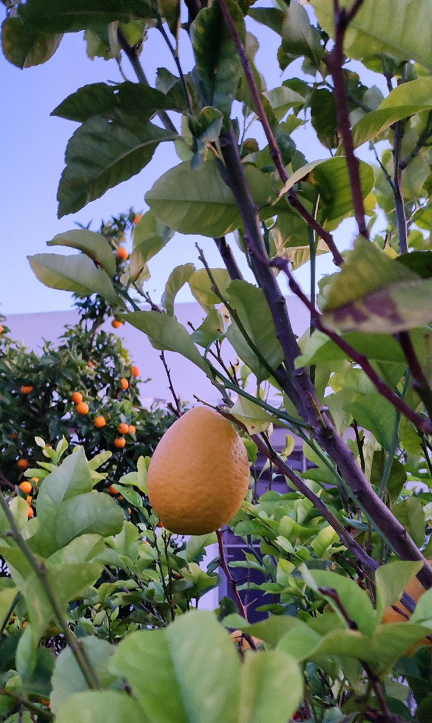
The Arabs brought bitter orange to the island during their rule in the ninth and tenth centuries, initially grown in the pleasure gardens of the nobility, valued as much for its scent as its fruit. Sweet oranges arrived later. Lemons came with the same wave of influence, along with the agricultural knowledge to grow them at scale on terraced hillsides where little else would flourish. By the time the Arab period ended, Sicily’s landscape had been permanently altered. The groves were already there, already part of the island’s identity.
Long before tourism became one of Sicily’s main industries, winter meant citrus picking. Families worked together from dawn until dusk, ladders leaning against the trees as each piece of fruit was carefully twisted from the branch by hand, packed into wooden crates and sent north across Italy and beyond. The work was hard, but it was honest, and every full crate represented another small measure of security for the household.
A good lemon harvest paid for a daughter’s dowry. A bad one meant a winter of careful rationing. There was a time, farmers in the citrus regions recall, when parents would marry off their children only after a good citrus crop, to be able to bear the costs of the celebrations. The groves were not decoration. They were the economy.
Many of those groves are still tended by the same families today. Some of the trees have stood in the same soil for half a century or more, quietly producing fruit through droughts, heavy rain and changing fortunes. There is something comforting about that kind of permanence. Walking through an old orchard, you cannot help but feel that each tree has witnessed countless harvests and has its own stories to tell. A well-tended citrus grove will produce fruit for up to a hundred years. That is not agriculture. That is inheritance.
Citrus in Sicily: The blood orange and Mt. Etna
To understand the Sicilian blood orange, you first have to understand Etna.
Across the fertile plains surrounding Mount Etna and extending through the provinces of Catania and Siracusa, citrus groves thrive in volcanic soils enriched by millennia of eruptions. The combination of mineral-rich terrain, strong temperature variation between day and night, and Mediterranean light creates conditions particularly favourable to high-quality fruit. These are oranges born of contrast. The warmth of the day against the cold of the mountain night. That contrast is precisely what makes them extraordinary, and it is one of those happy accidents of nature that simply cannot be copied elsewhere.
The sharp difference in temperatures creates the perfect climate for blood oranges to produce anthocyanins, which are responsible for the red colour of the flesh. The first time I cut one open, I wasn’t expecting to find flesh the colour of red wine hidden beneath an ordinary-looking peel. The Moro variety produces flesh so deeply pigmented it is closer to burgundy than orange. The Tarocco, arguably the finest eating orange in the world, contains 40% more vitamin C than other oranges, with flesh lightly streaked with red and a flavour so complex it barely needs description.
There is a phrase used in the groves: to be an IGP Sicilian blood orange, the orange has to be able to see Etna when it’s on the tree. It is said with a smile, but it is not entirely a joke. The IGP designation requires the fruit to be grown in the eastern provinces of Catania, Enna, and Syracuse, all within sight, effectively, of the volcano that makes them possible.
To mark the beginning of the season, the president of the blood orange consortium once climbed Mount Etna on foot, carrying a small batch of Moro oranges to the summit. It was a gesture of thanks, he explained, to the volcano that does most of the real work.
The cedro: Sicily’s most ancient citrus
Growing on my farm, among the lemon and orange trees, is a fruit that most people have never tasted and many have never even heard of.
The cedro, known in English as the citron, is a fruit that often leaves visitors scratching their heads. It looks, at first glance, like a lemon that has had an accident. Oversized, heavily ridged, thick-skinned, with surprisingly little flesh inside. The peel is the prize. It is transformed into candied fruit, marmalade, sweet pastries and liqueurs, while some varieties have almost no juice at all. Holding one in your hands feels like holding a piece of living history.
The cedro is not really grown to be eaten in the conventional sense. It is grown to be smelled, candied, preserved, and, most surprising of all, to be used in Jewish religious ceremony. Each year, Jewish officials travel to harvest kosher cedro for the Sukkot festival. Known in Hebrew as the Etrog, the fruit must be perfect: unblemished, undamaged, the stem completely intact. Inspectors examine each one with the concentration of jewellers assessing diamonds. A single cedro can fetch $100, reflecting not its size or its flavour but the centuries of tradition it carries.
The cedro arrived in the Mediterranean with Jewish settlers, probably in the third century BC. It is most famously associated with the Calabrian town of Santa Maria del Cedro, where every late summer Hasidic rabbis arrive from across the world to inspect the harvest. But the tree grows here too, on my coastal farm in western Sicily, and I find something quietly remarkable about tending a fruit whose story stretches back to the Bible.
Sadly, no one has knocked on my door offering me $100 for mine. My soil is not rich volcanic soil, and I live deliberately far from Etna. But my cedro produces fruit that smells, when cut, like something between lemon, floral water, and something older and harder to name. I use the peel in baking, in granita, in the occasional jar of preserves. It is, in all honesty, more interesting to look at and smell than to eat.
I was astounded once watching a Sicilian slice the cedro thinly, sprinkle it with salt, and eat it without further ado. Of course, I had to try it. I suggest you do too, if you ever get the opportunity. It is definitely not the worst thing I have eaten, and supposedly the cedro has considerable health benefits. It is a tree with an extraordinary history, and I am very glad it is here.
Granita and the art of the slow breakfast
Of course, you cannot talk about Sicilian citrus without mentioning one of the island’s great pleasures.
On a hot summer morning, there is nothing quite like a glass of freshly made lemon granita with a warm brioche. It sounds unusual if you have never tried it, but in Sicily it is breakfast, refreshment and tradition all rolled into one. Few things capture the island’s ability to turn simple ingredients into something unforgettable quite so perfectly.
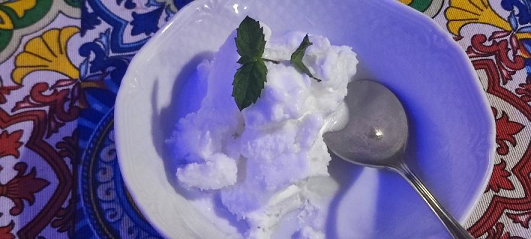
We have a particularly special spot not far from us that serves delicious granita. It is a hole-in-the-wall, off-the-beaten-track sanctuary, free from tourists, where you can watch the fishing boats bobbing in the water and enjoy something cooling and slightly tangy on a summer morning before the heat properly settles in. Once you have sat there with a granita in one hand and a brioche in the other, watching the light come off the water, you begin to understand why Sicilians have never felt the need to hurry breakfast.
A few citrus festivals in Sicily worth knowing
Every February, the town of Palagonia in the province of Catania holds the Sagra dell’Arancia Rossa di Sicilia, a festival dedicated entirely to the three IGP blood orange varieties. Stalls line the streets, juice flows freely, and the varieties are laid out side by side so visitors can taste the differences that the same volcano produces in three different fruits grown just a few miles apart. It is a good-natured, generous event with the unhurried atmosphere of something that has been happening for a very long time.
The small coastal town of Tre Fontane in the province of Trapani celebrates its own lemon festival each spring. It is a local affair, held in the piazza, with fresh lemon specialities for sale and all proceeds going to charity. Tre Fontane is not really a place that draws tourists. The sun, the beach and the ocean are its main offerings, and the festival reflects the town perfectly: unshowy, unpretentious, and exactly the kind of small unhurried celebration that suits lemons, which are themselves not a grand or spectacular fruit but a quiet, essential one.
One of my favourite celebrations of Sicily’s citrus heritage takes place each spring in the little town of Scillato, nestled in the Madonie Mountains. Its annual citrus festival fills the streets with stalls laden with oranges, lemons, marmalades, cakes, liqueurs and every imaginable citrus creation. It is less about spectacle than community, a chance to celebrate the growers whose orchards continue to shape the local landscape, and to remember that behind every jar of marmalade there is a family whose year has been shaped by the harvest.
What the citrus groves actually teach you
I did not expect, when I came to live on a Sicilian farm, to spend as much time thinking about citrus as I do.
We have two lemon trees that give us fruit almost all year round. The others start bearing in early winter and there will still be fruit on the trees right up until late spring. After the winter rains the weeds seem to multiply overnight, and many a long day of weeding has been punctuated by reaching up for a couple of oranges and quenching my thirst, before resuming the arduous task of clearing the pathways. It is not a bad way to work.
I press our own olive oil from 200 Belice olive trees in autumn. I pick lemons most of the year. I tend the cedro with a mixture of curiosity and respect. And every February, when I cut open the first blood orange of the season and find the flesh almost burgundy inside, I think about the volcano a hundred kilometres to the east that makes that colour possible, and the nine centuries of accumulated farming knowledge that learned to work with it rather than against it.
That is, I think, what citrus in Sicily is really about. Not the fruit itself, though the fruit is extraordinary. But the understanding of a place, its soil, its weather, its particular relationship between mountain and sea, that turns something ordinary into something that cannot be grown the same way anywhere else in the world.
Whenever I catch the scent of orange blossom drifting through an open car window, or stop to buy a bag of fruit from a farmer at the roadside, I am reminded that these groves are much more than orchards. They are living records of the families who planted them, cared for them, and continue to harvest them today. One orange, one lemon, and one cedro at a time.
Would you like to see what I write to my subscribers?
Access a letter for free.