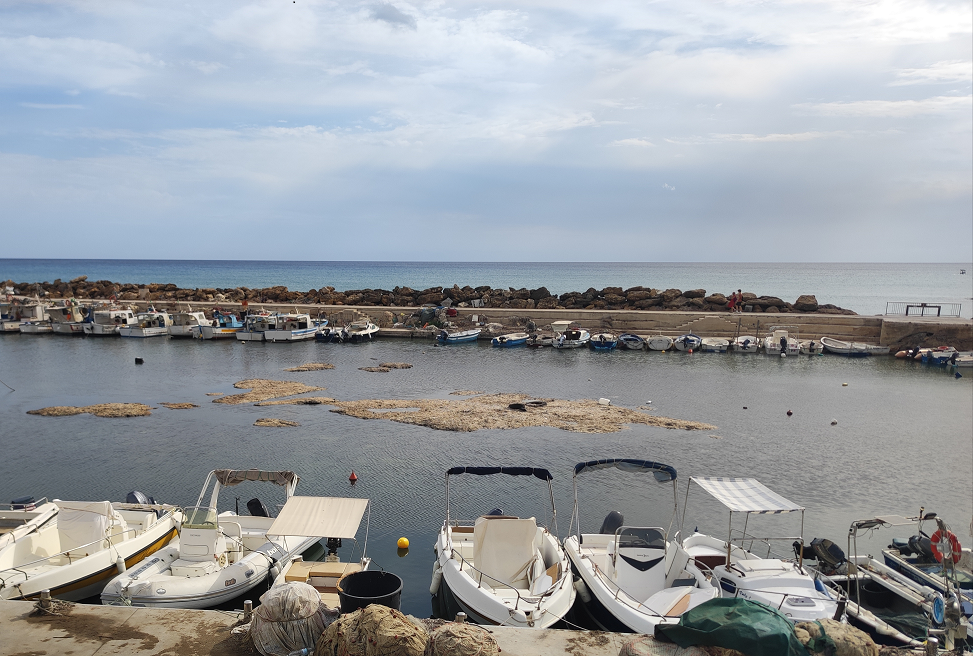
When Selinunte’s port filled with seagrass
Selinunte is the kind of place we go when we need to remember why we live here.
It is not a big town. It does not try very hard. It simply sits there, sunlit and sea-faced, with the temples nearby and the scent of salt always in the background. We go for a meal out, a change of scene, a small and easy escape from the farm.
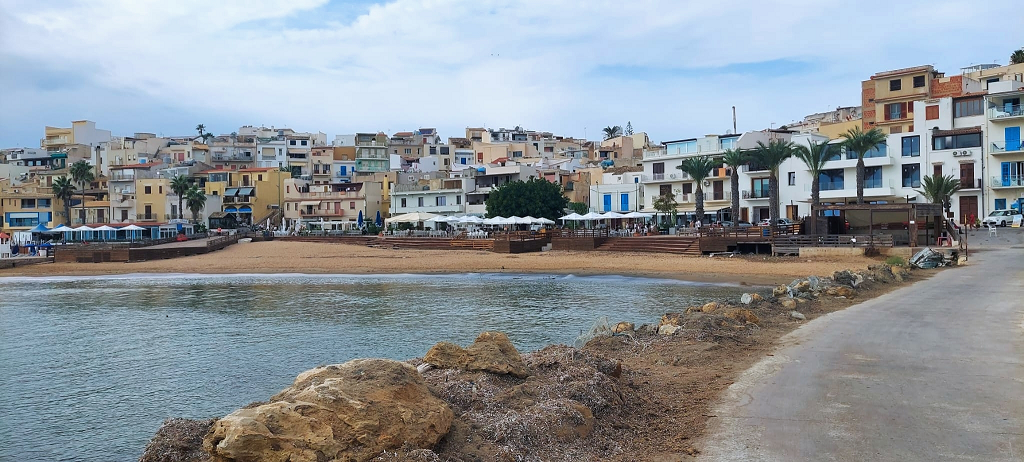
But Selinunte is not just a pretty coastline and a few tables set out for summer. It has a small working port. And when a port stops working, the whole place changes.
This year, following the arrival of Cyclone Harry in January, Selinunte’s port filled with seagrass and has remained clogged for months. Nine months, in fact. The storm made an existing problem considerably worse, pushing great quantities of Posidonia into the harbour basin and leaving boats trapped behind it.
For a while, some boats could still come and go. Others could not. Eventually, the local fishermen were forced to move their boats to Porto Palo di Menfi so that they could continue working. Their days no longer began in their own village, at their own port.
It also began to smell.
Posidonia may sound harmless when described as seagrass washed ashore by the sea. When great heaps of it are left to decompose, however, the smell is heavy, sour and distinctly unpleasant. I have smelt it myself on occasion when visiting Selinunte. It is not the fresh smell of the sea. It hangs around the harbour and follows you as you walk past.
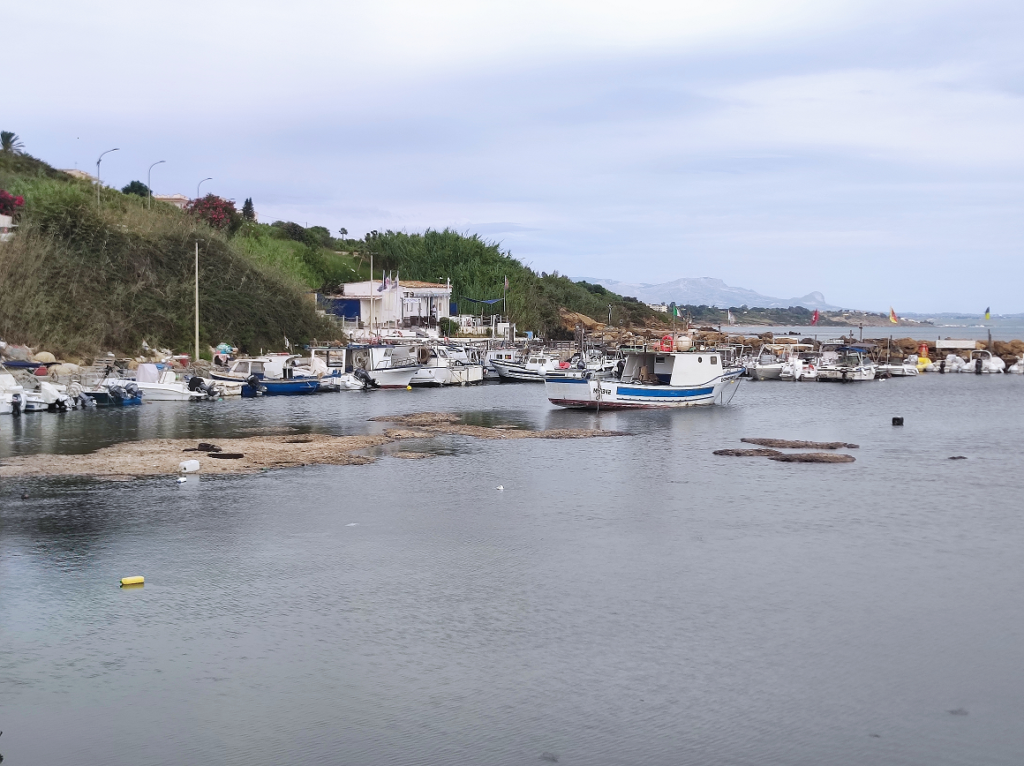
When Selinunte’s port became a blocked mouth
Seagrass sounds almost decorative, something you might expect to see scattered along the shoreline.
In reality, when it collects in the wrong place and becomes mixed with sand, it creates a thick and stubborn barrier. It raises the level of the seabed, stops boats moving safely and prevents fishing trips that pay bills. It interrupts livelihoods.
A problem like this does not remain politely contained at the water’s edge. It spreads into conversations, moods and arguments about who is responsible. It reaches the shops and restaurants that rely on the working season. It affects a town’s sense of being looked after, or being ignored.
Months is not an inconvenience
Weeks are one thing. People grumble, but they hold out hope. They assume someone will come, the right machine will arrive and there will be a plan.
Months is different.
Months is when fishermen begin doing the mental arithmetic of lost income and the additional cost of working from another harbour. Months is when anger sharpens, because the problem is no longer simply about a natural event. It becomes about what happens afterwards: what is done, what is not done, who responds and who does not.
The excavator that arrived on a truck
The situation was widely covered in local news. Photographs circulated publicly, and the story became difficult to ignore, even for those of us who only dip into Selinunte as part of our weekly escape.
The Region eventually appointed a contractor to remove the Posidonia that had already been hauled onto the quay. A tracked excavator arrived to begin that work.
It was not a dredger. It was not there to clear the sand and decomposing vegetation beneath the water which was the obstruction preventing the fishermen from using the harbour.
The fishermen had been waiting for Selinunte’s port to be dredged. When the excavator arrived to remove only the material piled on land, some of them sat on the heaps of Posidonia while others stood in front of the machine. The work was stopped and the excavator was taken away.
They wanted a real solution, not a tidier-looking quay beside a harbour they still could not use.
It was a very Sicilian moment. Not because Sicilians are uniquely dramatic, but because there is a particular kind of fury that appears when people feel they are being patronised. It is not only the problem that causes the anger. It is the performance of fixing the problem without changing the reality of people’s lives.
The sentence nobody wants to say out loud
Dredging costs money.
That is the part everyone circles around, as though it might bite.
The fishermen wanted dredging because dredging was what the harbour required. Removing the dried Posidonia from the quay might improve its appearance and its smell, but it would not deepen the water or bring the boats home from Porto Palo.
The Selinunte’s port comes under regional responsibility. The local council can protest, ask questions and push for action, but it cannot simply order a dredger to appear.
The Region has now put the dredging work out to tender. As I write this in September 2026, 26 companies have submitted offers for a contract worth approximately €483,500. The bids have begun to be examined, but no winning contractor or date for the start of work has yet been announced.
It is progress. But paperwork does not free a fishing boat. And nine months have now passed and no real action has been taken.
The fishermen, the Region and the slow boil of anger
If you live in Sicily long enough, you learn that anger here is rarely instant. It simmers.
It builds over repeated small dismissals, phone calls that go nowhere, promises made vaguely and kept loosely, and the sense that ordinary people are expected to absorb the cost of other people’s delays.
By the time you get to a sit-in, you are not looking at a sudden flare-up. You are looking at the end of a long, quiet accumulation.
This is the part outsiders often miss. They think the story is about seagrass.
It is not.
The story is about what happens when work stops and the response is slow, inadequate or absent. It is about fishermen having to travel to another town merely to reach their own boats. It is about how quickly “we live in a beautiful place” turns into “we are being left to rot.”
In this case, rather literally.
The sardine festival that did not happen
The part that made me genuinely sad was the cancellation of this year’s sardine festival.
It was something I had been looking forward to, not because I desperately need another plate of food, but because these evenings are part of what makes Sicily feel alive.
A festival changes the air. You get smoke, salt and noise. Plastic chairs and paper plates. People stand in clusters, talking with their hands as though the conversation requires choreography. For an evening, the town belongs to itself instead of existing merely for passing visitors.
The fishermen announced that the festival would not take place because the port problems had not been resolved. The traditional procession of the Madonna at sea was also cancelled. There were no safe or practical conditions for placing the statue aboard one of the fishing boats, and many of those boats were no longer in Selinunte’s port anyway.
The Madonna travelled through the streets, but she did not go to sea.
The council also cancelled the accompanying fireworks. Celebrating beside a harbour that had left its fishermen unable to work would have seemed rather hollow.
If your livelihood has been strangled for months by a blocked port, you eventually stop providing the town with its celebrations. A cancelled festival is not merely a cancelled evening. It is a signal flare.
It says, “We are not fine. We are not quietly coping. We are angry, and we are done pretending.”
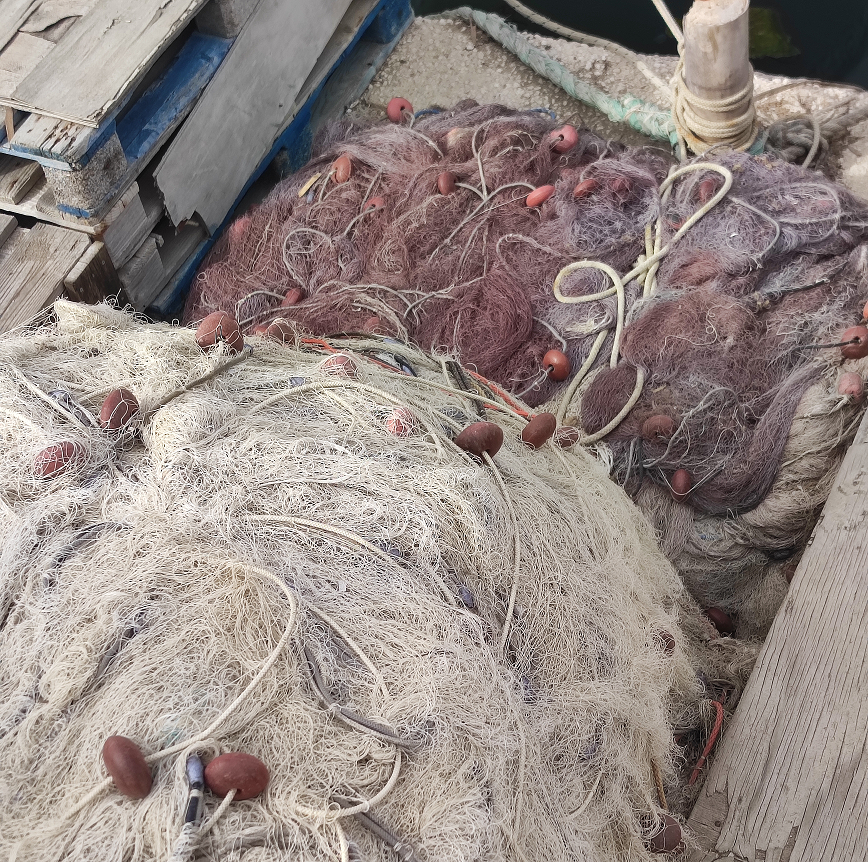
Selinunte is not a postcard
This is the thing about Sicily that I keep coming back to.
Sicily does not smooth itself out for visitors. It does not hide the ugly parts simply because the sea looks blue in the right light.
You can sit at a table near the water and eat beautifully while, a few metres away, decomposing seagrass fills the air and fishermen fight for the right to work. You can admire ruins that have outlasted empires while modern systems struggle to clear something as basic as a blocked harbour.
It is all true at once.
If you love Sicily, you learn to hold its contradictions without trying to edit them into something more comfortable.
What I hope happens next
I do not have a neat ending to offer because this is not a neat story.
There is now an actual tender for the dredging work, which is more substantial than another vague promise. But the harbour remains obstructed, the fishermen are still working from elsewhere and the smell of decomposing Posidonia remains part of Selinunte’s waterfront.
I hope the contract is awarded quickly. I hope Selinunte’s port is properly dredged and the fishermen can bring their boats home. Most of all, I hope the people whose lives depend upon the sea are treated as though they matter.
Because they do.
And Selinunte, for all its quiet charm, is not charming when its working heart is blocked and ignored.
If you would like to read a real letter from Sicily
If you would like to see what my paid letters are like before subscribing, I will send you a complete PDF copy of a real subscriber letter.
What some of our subscribers say
“Absolutely beautiful, thank you so much. I love the letter itself and all the little inserts.” ~ Fiona, Tuscany, Italy
“I thoroughly enjoyed your letter and look forward to receiving the next one.” ~ Karen, Maryland, USA
“I love that the bookmark actually has a tassel on it, the stickers are great, and the letter a real joy to read, I actually made a cup of tea to settle down with to read it.” ~ Rachel, Cornwall, UK

Kate
Kate writes Letters from Sicily, a monthly letter posted from the island to readers around the world. She writes about the places she visits, the people she meets, and the everyday moments that reveal what life here is really like. Another letter is always taking shape.


One Comment
Pingback: