What Sicilians miss most when they leave Sicily
Ask a Sicilian living far from home what they miss about Sicily and there is a good chance that food will be one of the first things mentioned. Not necessarily a particular dish, although there will undoubtedly be a few of those, but food in the much broader Sicilian sense: what is growing at that particular time of year, what is piled high at the market, what their mother cooks on a Sunday, and the familiar smells coming from the kitchen while the rest of the family slowly gathers around the table.
Food in Sicily still follows the seasons in a way that has been lost in many other places. Tomatoes belong to summer, artichokes arrive when the weather cools, and fennel, oranges, figs, wild asparagus, broad beans and cherries all have their moment. You eat what is growing because that is what appears at the markets and in the small greengrocers. Much of it has been grown locally, often on small family plots and farms, and it tastes completely different from fruit and vegetables picked before they are ripe, transported across several countries and kept in cold storage until they finally reach a supermarket shelf.
Sicilian fruit and vegetables are not always beautiful. Tomatoes can be misshapen, peaches may carry a blemish and potatoes frequently arrive still covered in soil, but they taste as they should. A tomato ripened beneath the Sicilian sun has sweetness and acidity and actually smells like a tomato. For Sicilians who move away, finding those familiar flavours can be surprisingly difficult.
But when Sicilians say they miss the food, I suspect they are often missing something much bigger than what was on the plate. They are missing everything that came with it.
The Sunday table
Sicilian food has never been simply about eating. It is about gathering, and nowhere is this more obvious than around the Sunday table. Several generations of a family may come together for lunch, with grandparents, parents, children, grandchildren, aunts, uncles and cousins all somehow finding room around the same table.
Nobody appears particularly concerned about how long lunch is taking. There may be antipasti followed by pasta, then meat or fish, vegetables, fruit, something sweet and finally coffee. Bottles of inexpensive local wine sit between the dishes, conversations overlap and somebody is invariably talking louder than everybody else. Children disappear from the table only to return later looking for something else to eat. Lunch can stretch well into the afternoon without anybody feeling the need to bring it to an end.
It is almost the complete opposite of the eat-and-go approach to food. A Sicilian living abroad might tell you that they miss their mother’s pasta, their grandmother’s arancine or the particular way their family prepares a favourite dish, and of course they miss the taste. But what Sicilians miss are the voices, the arguments, the laughter and the people squeezing another chair around a table that was already full. They miss belonging to it. It’s part of why, each month, we tuck a recipe from that kind of table into the letters we send.
The sea is never really far away
Then there is the sea. Sicily is an island and, even when you live inland, you are constantly reminded of it. There are small hilltop towns where you can look between the mountains and catch a thin sliver of blue on the horizon, and from most parts of the island the coast is never impossibly far away.
For those who grow up here, the Mediterranean becomes part of the background of everyday life. It is not necessarily about spending every weekend on the beach. It is simply the knowledge that the sea is there, along with the smell of salt in coastal towns, the fishing boats returning in the morning and the fishmongers displaying whatever has been caught that day.
The sea has also shaped the Sicilian table. Sardines, anchovies, octopus, calamari, swordfish and tuna have been part of the island’s cooking for generations. For somebody accustomed to buying fish that was swimming in the Mediterranean only hours earlier, moving hundreds of kilometres inland can mean losing another connection to the way they once ate. They miss the seafood, certainly, but they also miss that constant presence of the sea itself.
When Sicily turns green again
People who only visit Sicily in July and August could easily be forgiven for thinking the island is permanently golden. By late summer the fields have been bleached by months of sun, the grasses have disappeared and the earth is hard, cracked, and dry. Hills that were lush only a few months earlier have turned shades of ochre, brown and pale gold.
Then the first proper rains arrive and the transformation can be astonishingly quick. Green begins pushing through ground that looked almost lifeless a few days earlier. Fields change colour, wild plants appear along the roadsides and hills that seemed exhausted by summer suddenly begin to look alive again.
There is something reassuring about this annual renewal. The island is recovering from one summer and quietly preparing itself for the next, even though the relentless heat is still months away. For somebody who has grown up with that cycle, it becomes part of their understanding of the year.
It is not only the changing colours they miss when they leave. It is the mountains, enormous skies, olive groves, citrus orchards and vineyards, the dusty summer roads and the brilliant green countryside of winter and spring. Most of all, perhaps, it is the familiarity of looking across a landscape and knowing instinctively where you are.
Family, community and belonging
Perhaps more than anything else, what Sicilians miss their people. Family connections remain extraordinarily strong here and often extend well beyond the immediate household. Grandparents, cousins, aunts and uncles remain part of everyday life rather than people seen once or twice a year.
Of course, those close family ties have another side. Everyone tends to know what everyone else is doing. Mothers continue worrying about their children long after those children have children of their own, grandmothers want to know whether everybody has eaten, aunts have opinions and cousins somehow know family news before you do. Yet it is often only after moving away that the value of this enormous network becomes apparent.
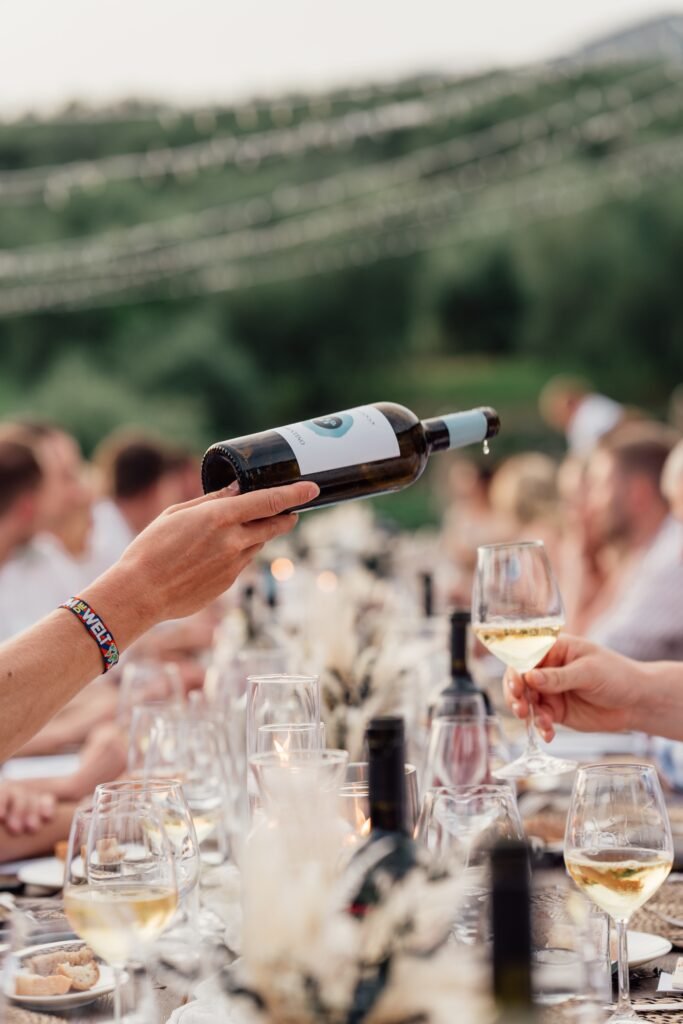
Birthdays, baptisms, weddings, Christmas, Easter, Sunday lunches and countless smaller occasions pull families back together. There does not always need to be a special reason for gathering either. Someone cooks, someone else arrives carrying a dish, another relative turns up with a bottle of wine and before long a simple lunch has expanded to accommodate half the family.
That sense of connection also stretches into the wider community. In smaller towns and villages especially, people notice one another. The woman across the road notices when the shutters have not opened. The man at the bar knows how you take your coffee. The butcher asks after your family. A neighbour appears at the door with a bag of courgettes, tomatoes or oranges because their garden has produced more than they could possibly use.
This familiarity can occasionally feel intrusive when you live amongst it every day. When you move somewhere where nobody knows your name, however, it can suddenly feel very precious.
Hospitality usually means food
Sicilian hospitality has its own language and, unsurprisingly, much of it revolves around feeding people. Visit someone’s home and something will usually appear on the table. You may insist that you are not hungry, but this is unlikely to make much difference. There will be biscuits, fruit, bread, cheese or something homemade, and if the visit drifts anywhere near lunchtime, your chances of escaping without being fed diminish considerably.
Food is one of the ways Sicilians show generosity and affection. It is how people welcome you, celebrate with you, look after you and sometimes comfort you. This is why those large, noisy family gatherings are so difficult to reproduce elsewhere. There is food in abundance, inexpensive local wine, several conversations taking place at once and somebody continually insisting that you take another helping.
To someone unfamiliar with it, the whole affair can look chaotic. To someone who grew up with it, that chaos is part of what makes it feel like home.
The Mediterranean climate
Sicilians complain about the weather just as enthusiastically as everyone else. By August, after weeks of relentless heat, most people have had enough. Shutters are closed against the afternoon sun, streets empty during the hottest hours and everyone begins wondering when the first proper rain will arrive.
Move somewhere with long, dark winters, however, and those endless Sicilian summers can suddenly acquire a certain appeal. Winters across much of the island are comparatively mild, spring arrives early and autumn can linger for weeks. There are winter afternoons when it is perfectly comfortable to sit outside in the sunshine, while summer evenings seem to continue indefinitely.
The climate shapes far more than the weather. It determines what grows, what people eat, when they gather outdoors and even the rhythm of the day. It is only after leaving that many Sicilians realise quite how much their lives were organised around the Mediterranean seasons.
What Sicilians really miss
Perhaps the reason Sicily can be so difficult to leave behind is that none of these things exists independently. The sea provides the fish that appears on the table, while the climate produces the vegetables bought at the market. The seasons determine what is cooked, the food brings the family together and those gatherings reinforce the sense of belonging to a particular place.
Ask a Sicilian abroad what they miss and they might tell you it is a proper tomato, their mother’s pasta or fresh sardines. They might talk about looking from a hilltop and seeing that narrow streak of Mediterranean blue in the distance, or remember the countryside turning green almost overnight after the first autumn rains. Others will immediately talk about Sunday lunches, family celebrations or simply being surrounded by people who have known them all their lives.
But underneath all of those things is something much harder to put into words. Sicily is a place where food, landscape, family, climate and community remain tightly woven together, and when someone leaves the island they do not necessarily miss one of those things more than another. They miss the way they all fitted together.
Perhaps, in the end, what Sicilians miss most is not any single thing about Sicily. It is the feeling of being home and belonging.