Borgo Parrini: Sicily’s little piece of Barcelona
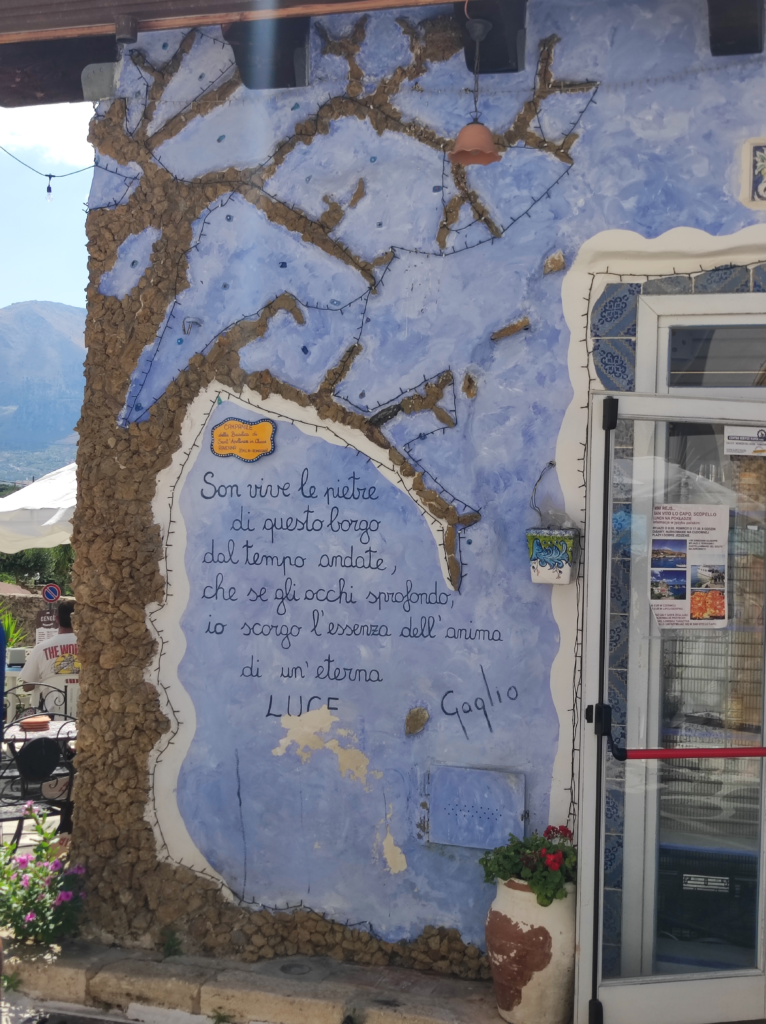
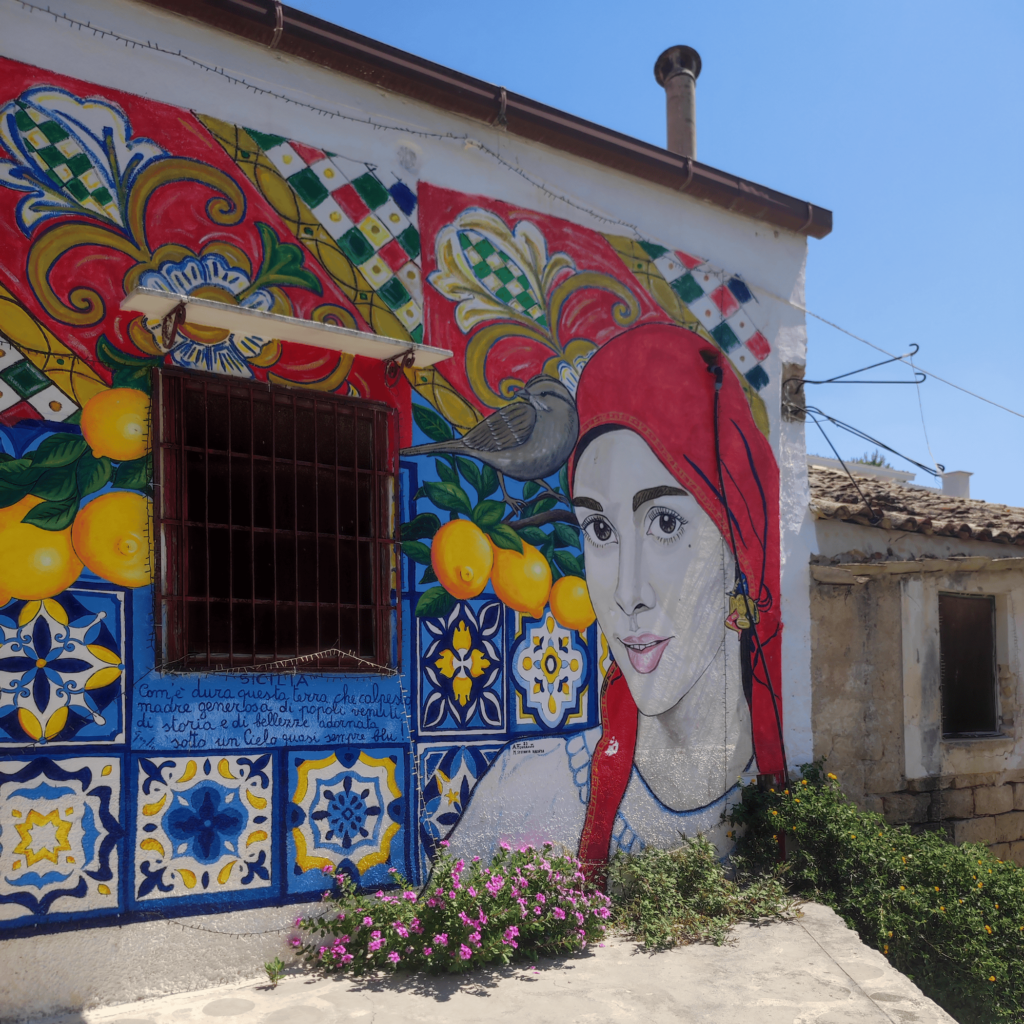
Just outside Partinico, around 40 kilometres from Palermo, there is a tiny village where the houses are painted Mediterranean blue and sunshine yellow, broken tiles climb across walls in colourful mosaics, quotations are written by hand across façades, and even the chimney pots have been turned into miniature works of art.
This is Borgo Parrini, sometimes called the Barcelona of Sicily because of its colourful, slightly eccentric architecture inspired by the work of Antoni Gaudí.
It is a grand nickname for such a tiny place. You can walk from one end of Borgo Parrini to the other remarkably quickly, but that is also part of its charm. This isn’t somewhere you come to tick off a long list of monuments. You come to wander slowly, look at the details and discover what happened when a handful of people decided they weren’t prepared to watch their village disappear.
A village brought back to life
Borgo Parrini wasn’t always the colourful little destination it is today.
Like so many rural communities in Sicily, the village suffered badly from depopulation after the Second World War. People left to find work and a different life in the larger towns and cities, houses were abandoned and, over the following decades, the borgo gradually slipped into decline.
A few inhabitants remained, however, and refused to give up on it.
Together with local entrepreneur Giuseppe Gaglio, they began transforming the neglected buildings, using colour and art to give the village a new identity.
The results are certainly difficult to miss.
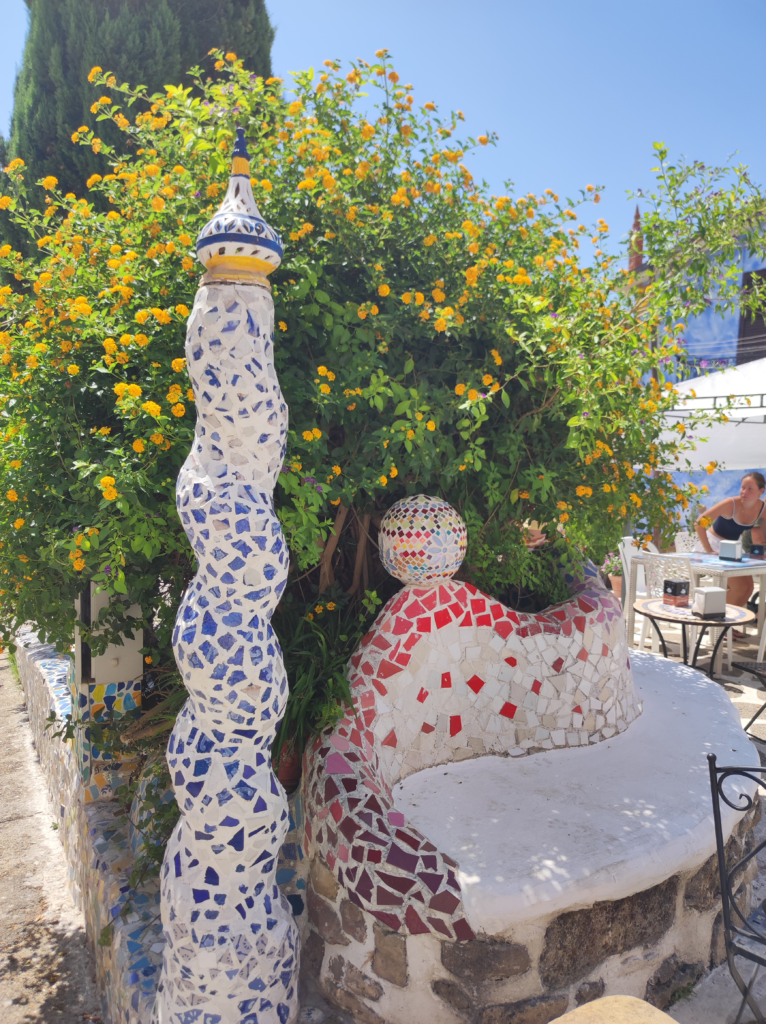
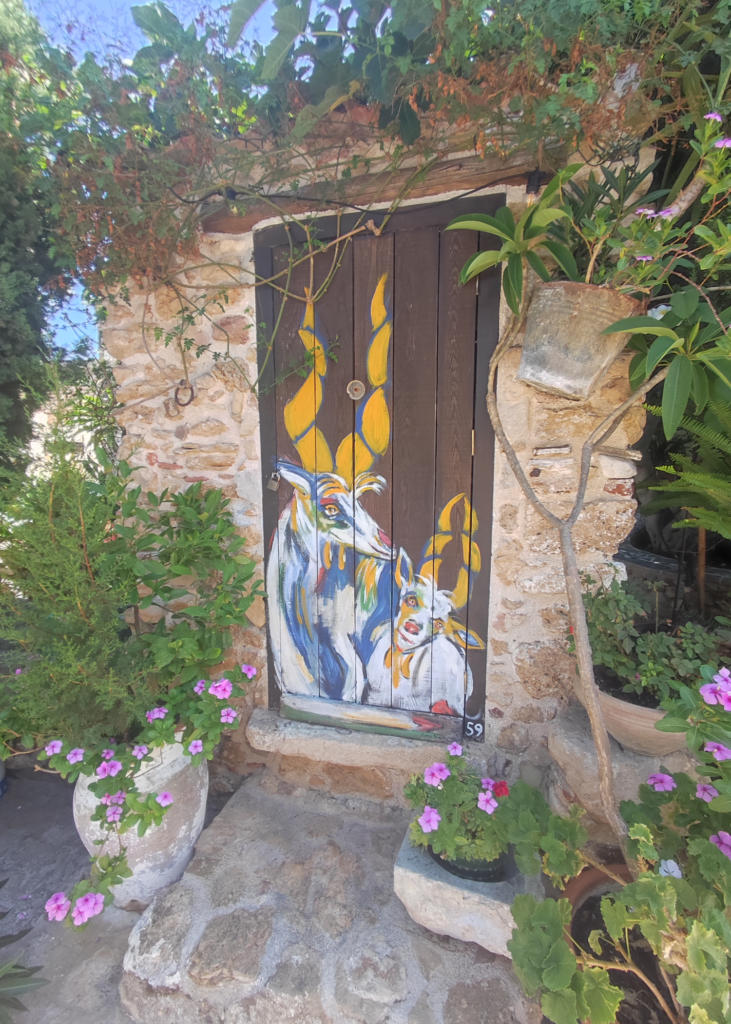
Brilliant cobalt and Mediterranean blues sit alongside dazzling whites representing the Marsala salt pans, and deep sunshine yellows. Doorways and windows are picked out in contrasting colours, while pieces of ceramic and crushed tile have been incorporated into walls, borders and sculptural decorations.
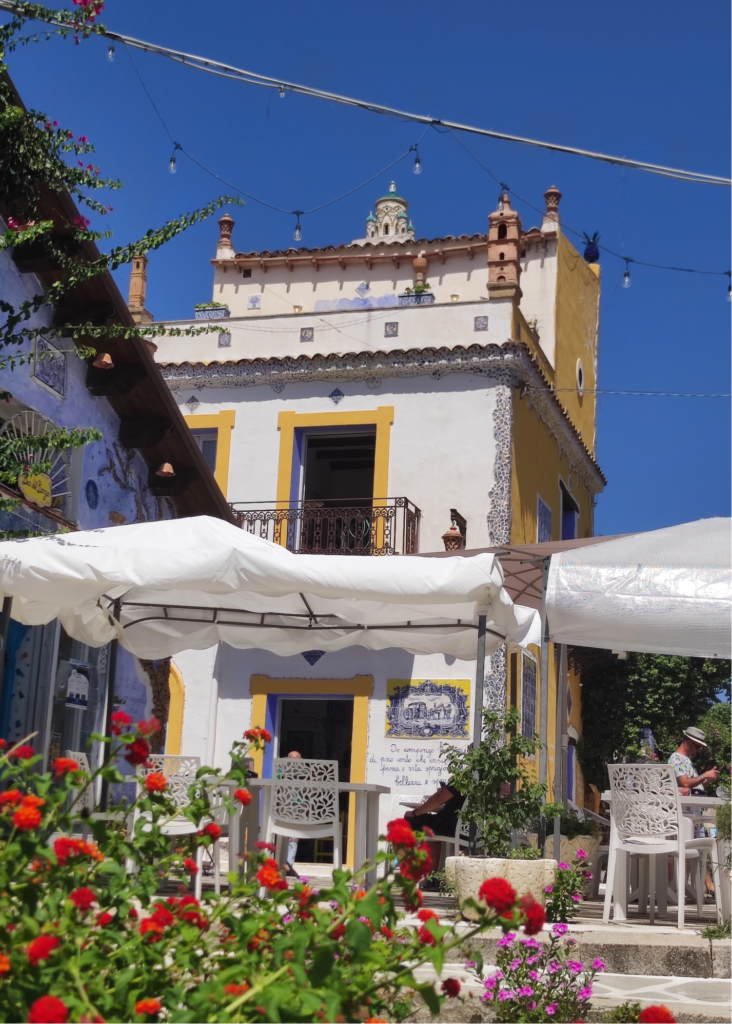
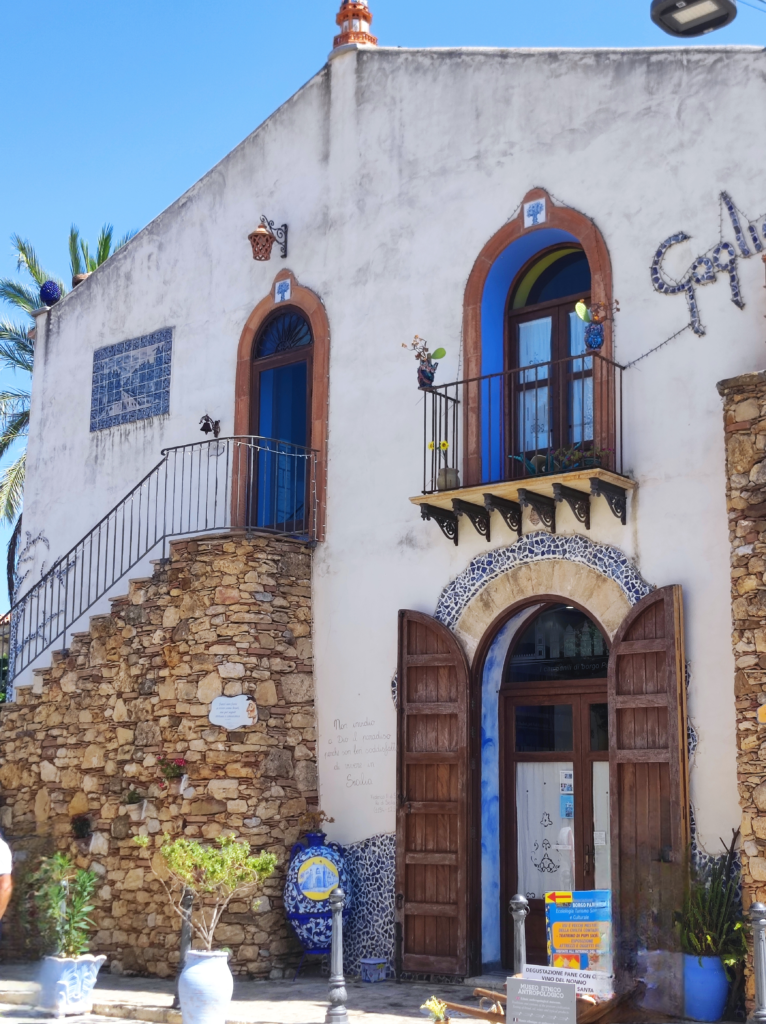
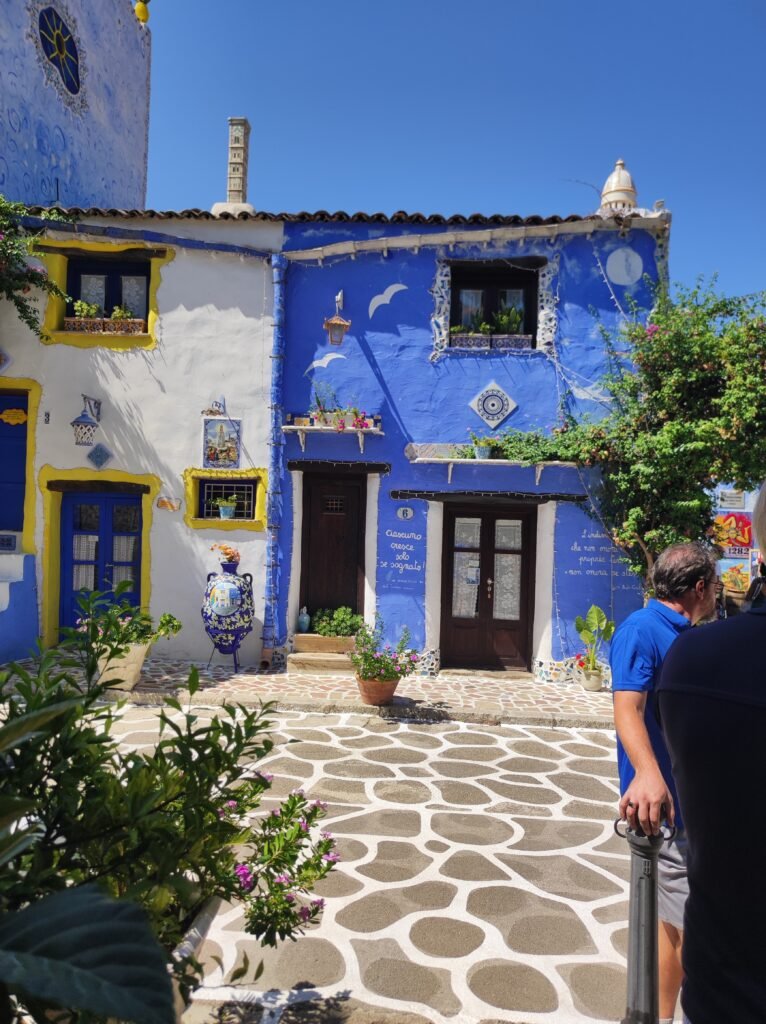
The influence of Gaudí is obvious, particularly in the irregular mosaics and playful shapes. There are echoes of Barcelona here, but Borgo Parrini hasn’t simply tried to recreate it. There is still something distinctly Sicilian about the place.
Perhaps it is the light. Perhaps it is the ceramics, the balconies and terracotta pots, or simply those colours against a cloudless Sicilian sky.
Borgo Parrini is not just an open-air museum, but it is also a work in progress. Although only a handful of the houses have been decorated and brightly painted, the aim is to eventually have every house within the village embellished and painted like the rest. The only constraints at present are time and money.
Look up at the chimneys
One of my favourite details is something that would be very easy to miss if you were concentrating only on the colourful façades.
Look upwards.
Some of the ordinary old chimney pots have been replaced with wonderfully elaborate ceramic versions inspired by famous Italian landmarks. Among them are interpretations of Giotto’s Campanile in Florence, the Amalfi Cathedral and Venetian architecture.
They are whimsical and completely unnecessary, which is precisely why I like them.
This is a village where somebody has thought about what should be sitting on top of a chimney.
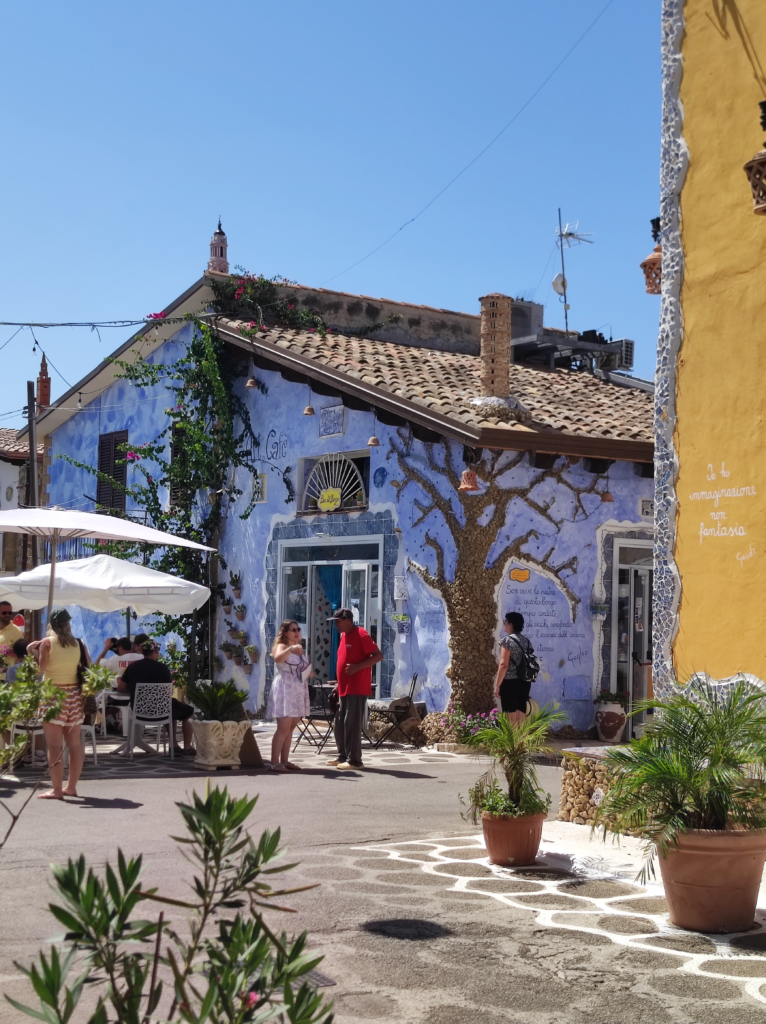
Throughout the streets, handwritten quotations appear on the walls alongside painted pictures, ceramic panels and mosaics. It gives Borgo Parrini the feeling of an open-air gallery, although one without any particular route to follow.
The best way to see it is simply to wander.
Frida in a Sicilian village
One image in particular took me by surprise.
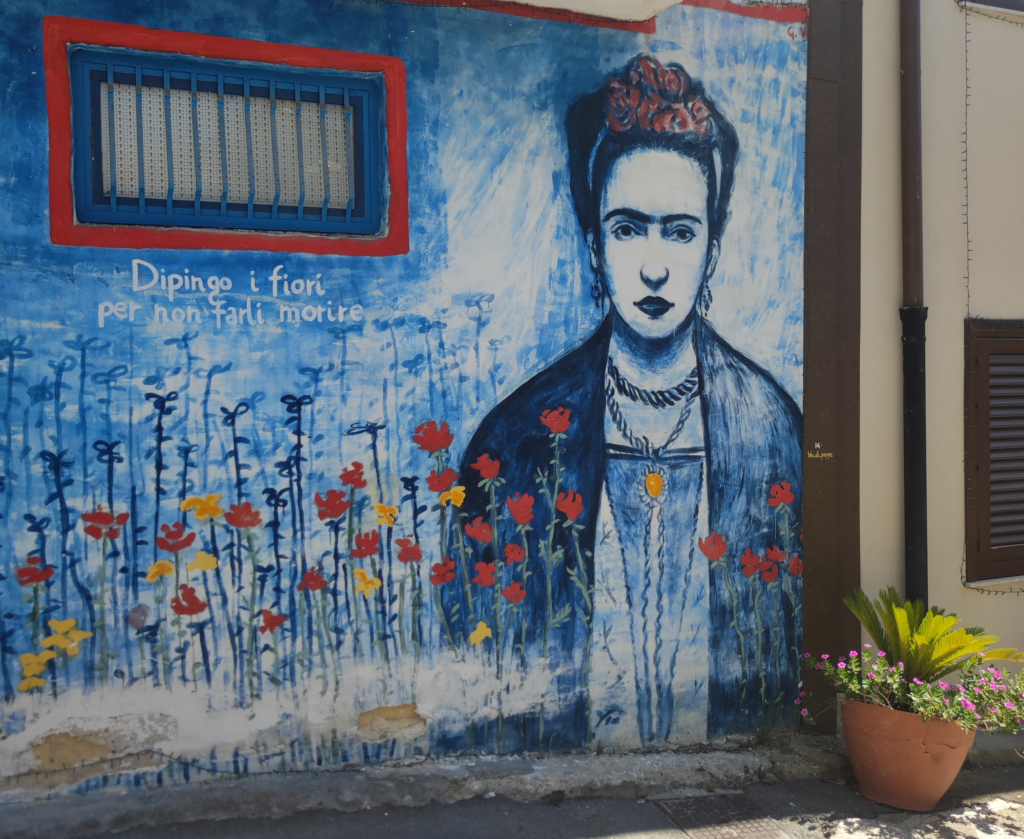
Among all this Sicilian and Mediterranean imagery is the unmistakable face of Frida Kahlo.
The work, Frida alla Luna, translated as Frida to the Moon, was created by artist Peppe Vaccaro as a tribute to the famous Mexican painter.
At first she seems an unlikely person to encounter on the wall of a tiny village outside Partinico, but in this slightly unconventional place she somehow doesn’t feel out of place at all.
That is part of the fun of Borgo Parrini. You never quite know what will appear around the next corner.
More than painted houses
It would be easy to come here, photograph the colourful streets and leave, but there is more to Borgo Parrini than its appearance.
There are several small museums, including a puppet museum, a Sicilian cart museum and an art museum. We chose to visit the Ethnic Anthropological Museum, and I’m glad we did.
For just €2 in 2026, it contained a surprisingly interesting collection of objects from Sicily’s past.
There was old agricultural equipment and household paraphernalia, but also Second World War motorcycles displayed with German helmets. One of my favourite exhibits was an old cart from which travelling puppet performances would once have been given, accompanied by a collection of the puppets themselves.
Sicilian puppetry has a long history, and seeing the old cart made it much easier to imagine these performances as travelling entertainment rather than something confined to the puppet theatres we associate with them today.
It is one of those little museums where you find yourself peering into corners because you aren’t quite sure what you will find next.
The entrance ticket also came with a small piece of sfincione, Sicily’s wonderfully soft, thick answer to focaccia, and a thimbleful of wine.
It had just turned eleven in the morning.
Fortunately, when I say a thimbleful, I really do mean a thimbleful.
Crafts, Ceramics and a Bakery Since 1947
Small stalls line parts of the village selling crafts made by local women as well as colourful Sicilian ceramics. There are also workshops where you can watch people engaged in various crafts.
I didn’t examine the ceramics closely enough to establish exactly where they had been made, although some certainly reminded me of the work associated with Caltagirone, Sicily’s famous ceramic town.
What I can say is that they were noticeably better than much of the mass-produced souvenir ware that fills some of Palermo’s tourist markets. If you want to take something home from Sicily, Borgo Parrini is worth having a browse.
There are also one or two places to eat and Za Santa, a bakery that has apparently been making bread and cakes here since 1947.
We did go inside.
We did not buy anything.
The cakes looked tempting, but several flies had also discovered them and were having what appeared to be a very pleasant Sunday morning inside the display cabinet. The baker was periodically shooing them away and seemed considerably less troubled by the situation than we were.
We decided to leave the cakes and bread to the flies.
Is Borgo Parrini Worth Visiting?
I think it is, with one qualification: don’t expect a large village or a full day’s sightseeing.
Borgo Parrini really is tiny.
If you simply want to walk around the streets, take some photographs and have a quick look at the buildings, you could probably see it in under an hour. Visit the museums, browse the stalls and workshops, stop for something to eat and take your time over the details, and you can easily make a pleasant morning or afternoon of it.
It works particularly well as part of a day out in this corner of western Sicily rather than as the sole destination of a long journey across the island.
From Palermo, however, it is an easy and unusual excursion if you have your own transport and you would be there in just under an hour, so a perfect side trip for a few hours.
And unusual is really the reason to come.
There are grander villages in Sicily. There are certainly older ones even if this one dates from the sixteenth century, and there are places with far more important churches, archaeological sites and works of art.
Borgo Parrini isn’t trying to compete with any of them.
Its story is about something else entirely. A village that was slowly being abandoned was given another chance because the people who remained chose colour instead of decay. They painted the walls, added mosaics, decorated the chimneys, wrote inspirational quotes across the houses and turned something that might have quietly disappeared into somewhere people now deliberately seek out.
That, more than the comparison with Barcelona, is what makes Borgo Parrini worth seeing.
Visiting Borgo Parrini
Borgo Parrini lies just outside Partinico, west of Palermo. It is easiest to visit with your own car, particularly if you want to combine it with other places in western Sicily.
There is a large parking area opposite the village, and when we visited the parking charge was €2. Allow at least an hour for a leisurely walk around, and longer if you want to visit the museums, look around the workshops or stop for lunch.
Some of the museums charge a small admission fee; our visit to the Ethnic Anthropological Museum cost €2. As opening times, entrance charges and access can change, it is worth checking current information before making a special journey.
For photographers, the colours are at their best beneath Sicily’s strong daylight, although visiting earlier in the day also gives you a better chance to wander before the village becomes busier.
And don’t forget to look up.
Some of Borgo Parrini’s loveliest surprises are sitting on the rooftops.
If you are in the area and you want to explore more, the visit Sicily website is a goldmine of information.
I write about my adventures in letters I send out monthly to subscribers.