Why Sicily’s citrus groves are unlike anywhere else in Italy
There is something quietly magical about Sicily’s citrus groves.
It isn’t simply the sight of oranges buried amongst glossy green leaves, or the perfume of lemon blossom drifting through the warm spring air. It is the feeling that you are standing in a landscape that has changed remarkably little over the course of a thousand years. The trees may not be the originals, but the idea behind them—the careful cultivation of fruit, water and shade—is one of the island’s oldest surviving legacies.
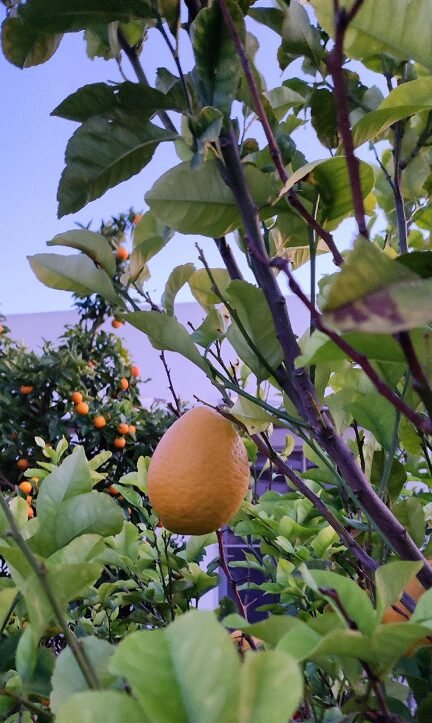
The first winter we spent in Sicily, I couldn’t quite believe the variety of citrus growing in my garden. Everywhere I looked there were oranges, blood oranges, cedro, mandarins, grapefruit, tangelos, and beautiful lemons that bear all year round.
Although the trees had clearly been neglected for several years before we arrived, they still bent beneath the weight of fruit, roadside stalls overflowed with lemons and mandarins, and neighbours would quietly arrive at the gate carrying bags of citrus they simply couldn’t use themselves. Not wanting to offend, I gratefully accepted their generous gifts while inwardly wondering just how many more jars of lemon curd and marmalade I could possibly make that week.
Yet those groves are far more than beautiful orchards. They tell the story of conquest, ingenuity and adaptation. Like so much in Sicily, they exist because one civilisation built upon the knowledge of another.
The story behind Sicily’s citrus groves
Long before oranges became synonymous with the island, Sicily was already one of the Mediterranean’s great agricultural regions. The Greeks and later the Romans cultivated olives, vines and wheat, while the citron, or cedro as it is called here—an ancient citrus fruit with a thick, aromatic rind—was already known on the island. It was valued more for its fragrance and medicinal qualities than for its flesh, which is exceptionally sour.
Here, cedro is enjoyed in two very different ways. The first is surprisingly simple: sliced, sprinkled with salt and eaten fresh. The second transforms the thick aromatic peel into glacé fruit by slowly simmering it in sugar syrup until it becomes beautifully translucent—a familiar sight in Italian shops at Christmas.
How water changed Sicily forever
The landscape, however, looked very different from the one we recognise today.
The transformation began in the ninth century when Arab forces crossed from North Africa and gradually established control over much of Sicily. Their influence extended far beyond politics and religion. They arrived with an extraordinary understanding of agriculture, particularly of how to farm in hot, dry climates where water was both precious and unpredictable.
Perhaps their greatest gift to Sicily was not the introduction of a particular fruit, but a new way of thinking about water.
The Arabs developed sophisticated irrigation systems that collected, stored and distributed water with remarkable efficiency. Underground channels, reservoirs, water wheels and carefully engineered canals allowed previously dry land to flourish. Even today, many of the principles introduced during that period continue to influence agriculture across the island.
With improved irrigation came new crops that would forever alter Sicilian cooking and the Sicilian landscape. Lemons, bitter oranges, limes, aubergines, spinach, sugar cane, cotton, rice, mulberries and countless herbs all became established during this remarkable period of innovation. It is difficult to imagine Sicilian cuisine without them, yet many arrived only because the island’s new rulers understood how to make the most of every precious drop of water.
The citrus groves themselves were inspired by ideas that stretched even further east. In Persian culture, gardens represented paradise—a place where flowing water, fruit trees, shade and fragrance existed together in perfect harmony. Those ideas travelled west with the Arab world and found an ideal home in Sicily’s climate.
Walking through an old citrus grove today, it is easy to understand their appeal. Even on the hottest afternoon, the dense canopy provides welcome shade. The air feels noticeably cooler beneath the trees, while the scent of blossom lingers long after spring has passed. These were not simply orchards designed for maximum production. They were places of beauty, places where nature and careful cultivation worked together.
One of the delights of living in Sicily is discovering that the seasons don’t behave quite as you expect them to.
Why winter is Sicily’s citrus season
While much of northern Europe waits impatiently for spring, Sicilians are harvesting oranges. Winter is citrus season. Roadside juice stalls appear in Palermo, filling paper cups with freshly squeezed blood oranges that seem almost impossibly sweet. Lemons find their way into cakes, pasta dishes, salads and seafood. Mandarins sit in bowls on kitchen tables, filling entire rooms with their perfume before a single fruit has been peeled.
Even now, I still marvel at my orange grove laden with fruit while wearing a winter coat. It’s July, as I write this, and already my oranges are the size of ping pong balls. Hard, green, full of promise.
One of the unexpected pleasures of owning a citrus grove is discovering that the work never really ends. There is always a tree to prune, fruit to thin, branches to support or lemons to pick before they shrivel in the heat. Living among citrus teaches patience. Trees planted decades ago still reward the people who water and care for them today, and those we plant now may not reach their full potential for another generation. It is a reminder that orchards are never really built for ourselves alone.
The fruit that made Sicily rich
The citrus trade eventually became one of Sicily’s great economic success stories. By the nineteenth century, Sicilian lemons were being exported throughout Europe and across the Atlantic. Sailors relied upon them to prevent scurvy during long sea voyages, while merchants built thriving businesses supplying fruit to growing cities far beyond the island. Entire communities depended upon the annual harvest, and packing houses, warehouses and railways grew around an industry that helped shape Sicily’s modern economy.
Today, many of those groves are still family-owned, passed down through generations who continue to care for trees planted by their parents and grandparents. Some of the methods have changed, but much remains reassuringly familiar.
Orange blossom season
Perhaps what I enjoy most, however, is the orange blossom.
Ask someone what an orange tastes like and they’ll have no difficulty describing it. Ask them what orange blossom smells like and most people pause, searching for words that never quite seem adequate. It is sweet without becoming cloying, floral without being overpowering, and somehow captures the optimism of spring in a way few other scents can.
There are mornings when I open the windows and know immediately that another grove has come into flower. Before I even step outside, the fragrance tells me the season has changed once again.
It is one of those small pleasures that reminds me why I fell in love with this island.
Living in Sicily’s open-air museum
The longer I live here, the more I realise that Sicily’s landscape is like an open history book. An olive grove tells one story. A vineyard tells another. Almond orchards speak of one era, citrus groves of another. Every field, every terrace and every dry-stone wall has been shaped by the people who came before, each leaving behind something that the next generation chose to keep rather than erase.
The next time you find yourself walking through a Sicilian citrus grove, pause for a moment before picking the fruit. Listen for the trickle of irrigation channels that have carried water across this land for centuries. Breathe in the scent of blossom if you are fortunate enough to visit in spring. Look beyond the oranges themselves and imagine the engineers, farmers and gardeners who transformed an already fertile island into one of the Mediterranean’s great agricultural landscapes.
Observations:
The fruit may be what first catches your eye, but it is the history growing beneath the branches that stays with you long after you’ve left Sicily.
If you enjoyed this article, come and join our Letters from Sicily subscription.